
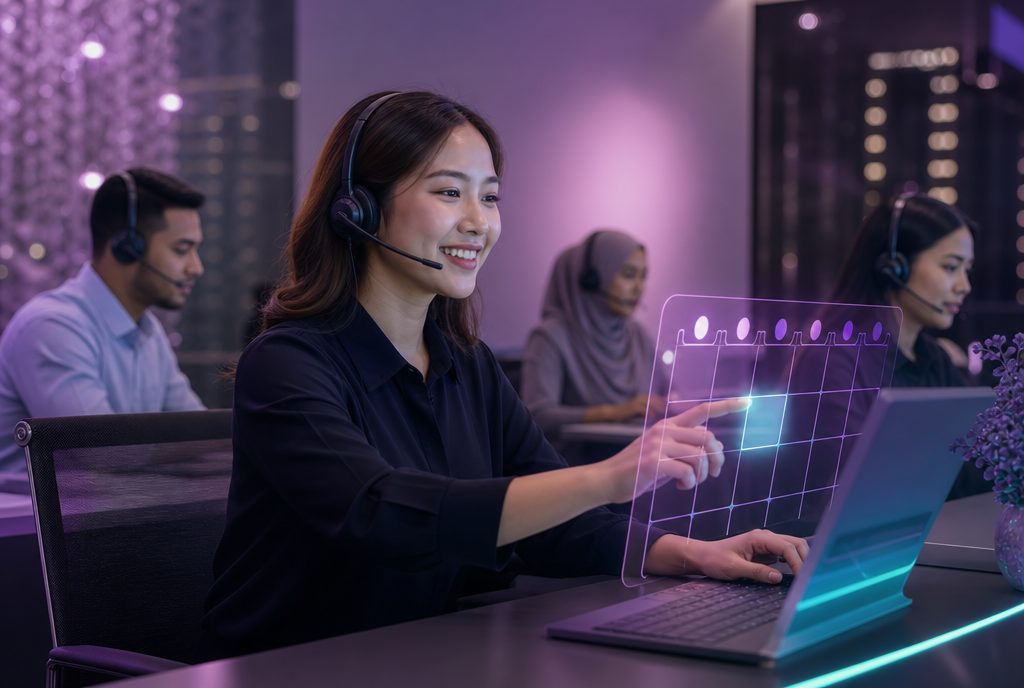
An outsourced appointment booking and answering service captures every enquiry that comes in, even when your own team is busy, out of the office or simply not on the phone, and turns it into a confirmed booking or a logged message that gets followed up. For businesses where every missed call is a missed customer, this closes a gap that most owners only notice once they start counting how many calls actually go unanswered.
Why Do Businesses Miss So Many Calls in the First Place?
Most small and mid-sized businesses do not have a receptionist sitting by the phone all day. The person who would normally answer is often the same person doing the actual work, cutting hair, fixing a pipe, seeing a patient, running a client meeting. When the phone rings mid-task, it either goes unanswered or interrupts something that mattered more in that moment.
The caller on the other end rarely leaves a voicemail. Research into consumer behaviour around missed calls consistently shows that most people simply hang up and try the next business on the list, particularly for anything that feels like a commodity service where one provider is easily substituted for another.
The Pattern Most Owners Do Not See
Because a missed call leaves no obvious trace, owners tend to underestimate how often it happens. It is only when a business starts logging call volume against calls actually answered that the size of the gap becomes clear, and it is often larger than expected.
How Does an Answering Service Actually Work?
A trained team answers calls on the business's behalf, using the business's own greeting and, where needed, its actual booking calendar, so the caller experiences something close to speaking directly with the business. Depending on the setup, the service can book the appointment directly into the calendar, take a message for a callback, or handle simple questions about hours, pricing or location without needing to involve the business owner at all.
Live Booking Versus Message-Taking
Some businesses want every call resolved on the spot, an appointment booked there and then, with no back-and-forth required. Others prefer a lighter touch, where the service takes down details and the business follows up personally, particularly for more complex enquiries that need a human judgement call. Both models work, and the right one depends on how standardised the business's booking process actually is.
What Should the Service Sound Like?
The single biggest risk with any answering service is that it sounds obviously outsourced, generic greetings, agents with no real knowledge of the business, scripts that do not match how the business actually talks to its customers. A well-run service avoids this by training agents specifically on the business's tone, common questions and booking rules, so the caller experiences continuity rather than a handoff to a stranger.
- Brand-accurate greetings, the caller should hear the business's name and tone, not a generic call centre opener.
- Real booking knowledge, agents need to understand appointment durations, buffer times and which slots are genuinely available, not just what a calendar shows on the surface.
- Judgement on urgency, some calls need immediate escalation, a client cancelling last minute, a genuine emergency, and the service needs to know which calls those are.
Where Does the Technology Fit In?
Modern answering services typically connect into the business's existing booking or calendar system, rather than running a separate spreadsheet that someone has to reconcile later. A properly integrated cloud phone system makes this far simpler than the older on-premise setups many small businesses are still running, since calls can route seamlessly between the business and the answering team without the caller ever knowing a transfer happened.
CRM and Booking Integration
Where the business already uses a CRM to track clients and appointment history, integrating that system means the answering team can see a returning caller's history rather than starting from zero every time. Our guide to CRM integration and the contact centre experience covers what this looks like in practice for businesses considering the shift.
Is This Only for Small Businesses?
Not at all. Many larger businesses use an outsourced answering layer specifically for after-hours coverage or overflow, so a receptionist handles calls during business hours and the outsourced team picks up whatever spills over, evenings, lunch breaks, unusually busy days. This hybrid model gives the business full coverage without paying for a full-time headcount to sit idle during quiet periods.
After-Hours and Weekend Coverage
For service businesses where enquiries genuinely arrive outside standard hours, clinics, trades, property agents, after-hours coverage alone can meaningfully increase the number of bookings captured, simply because the phone is being answered when competitors' phones are not.
What Should a Business Ask Before Signing Up?
- How agents are trained, ask specifically how the provider learns the business's services, pricing and booking rules before going live.
- What happens with edge cases, a caller asking something outside the script should still get a sensible response, not a dead end.
- How performance is reported, the business should be able to see call volume, booking conversion and missed-call recovery over time, not just a monthly invoice.
- Multilingual coverage, in Singapore's market, being able to handle a call in Mandarin or Malay as naturally as English matters for many customer bases.
An answering service is a small operational change with an outsized effect on how many enquiries actually convert into paying customers. For businesses weighing this against building the function internally, it is worth reading our comparison of outsourcing costs in Singapore before deciding either way.
Which Industries Rely on This the Most?
Appointment-driven businesses feel the pain of missed calls more acutely than most, since a missed call is not just a missed conversation, it is a specific missed booking with real revenue attached. Clinics and dental practices, hair and beauty salons, law firms taking initial consultations, property agents fielding viewing requests, and trades businesses like plumbers or electricians all share the same pattern: the person who would answer the phone is usually the same person who is busy delivering the actual service.
Each of these industries has its own particular booking logic worth getting right. A dental practice needs to know which procedures require longer appointment slots. A property agent needs someone who can quickly check a viewing calendar across multiple listings. A trades business often needs to triage between a routine booking and something urgent that cannot wait until the next scheduled slot. A generic answering service that has not been briefed on these nuances will struggle to book appointments correctly, which creates more work rather than less.
Matching the Service to the Industry
The best answering services build industry-specific playbooks rather than applying one generic process to every client. This means understanding not just how to book an appointment, but what questions typically need to be asked first, what information the business needs captured before the caller hangs up, and which situations should never be handled by the phone alone.
How Does This Compare to Just Using an App or Online Booking Widget?
Online booking widgets are genuinely useful and many businesses run both in parallel. But a meaningful share of customers, particularly for higher-value or more personal services, still prefer to speak to someone before committing, especially for a first appointment where they may have questions a booking widget cannot answer. An answering service captures this segment of customers that a self-service tool alone would lose, without requiring the business to staff a phone line itself.
The two channels work best together rather than as a replacement for one another. A booking widget handles the straightforward, repeat-customer bookings efficiently, while a trained answering team handles the calls that need a real conversation, a first-time caller with questions, someone unsure exactly what service they need, or a caller who simply prefers talking to typing.
Frequently Asked Questions
Can an answering service book appointments directly into my calendar?
Yes, most modern answering services integrate with common booking and calendar systems so appointments are entered live during the call rather than passed on for the business to book later. This depends on the specific calendar tool being used, so it is worth confirming compatibility before signing up.
Will my customers know they are speaking to an outsourced team?
If the service is set up well, most callers will not notice. Agents use the business's own greeting and are briefed on its services, pricing and tone, so the call feels like a natural extension of the business rather than a separate provider.
Do I need this if I already have a receptionist?
It depends on your call volume and hours. Many businesses use an outsourced answering service specifically for overflow and after-hours coverage, so the receptionist handles calls during the day and the outsourced team catches whatever comes in outside those hours.
How is a genuine emergency handled versus a routine booking?
A well-trained team is briefed on which types of calls need immediate escalation rather than standard message-taking. This is usually agreed in advance with the business, covering what counts as urgent and who should be contacted directly.
Is this cost-effective for a small business compared to hiring a receptionist?
For many small businesses it is, since you pay for call coverage rather than a full-time salary, especially when call volume does not justify a dedicated in-house role. The right comparison depends on your actual call volume and how much revenue each missed call represents.
If you would like an honest, practical view on this for your own business, get in touch via Connect Centre Group's contact page.