
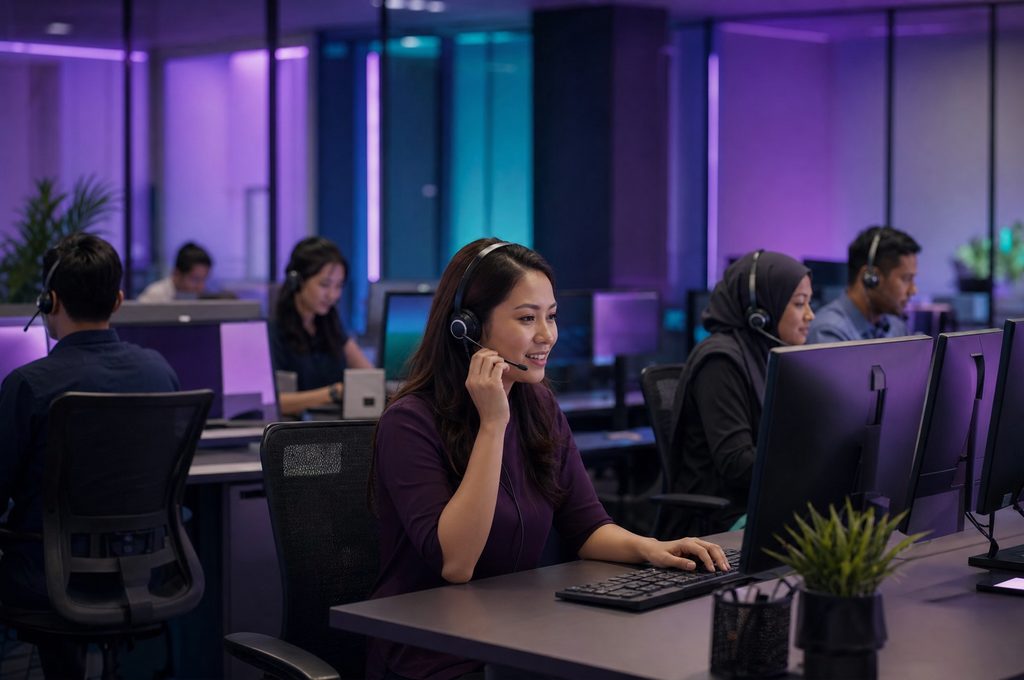
Healthcare contact centre outsourcing in Singapore works best when the partner is built for three things at once: high appointment volume, calls that sometimes carry clinical urgency, and patient data that falls under both the PDPA and the sector's own confidentiality expectations. A generalist call centre can answer the phone. A healthcare-ready one knows when a caller needs to be triaged to a nurse line rather than booked into a routine slot, and it treats every NRIC number and medical detail with the discipline a clinic's own front desk would.
For clinic groups, hospitals and allied health providers in Singapore, the decision to outsource patient-facing calls, WhatsApp enquiries or appointment scheduling is rarely about cutting cost alone. It is usually about coverage: extending opening hours, absorbing seasonal flu-season spikes, or freeing clinical staff from spending their day on the phone instead of with patients. Done well, it protects the patient experience. Done carelessly, it introduces risk into the most sensitive part of a healthcare organisation's operations.
Why Do Healthcare Providers Outsource Their Contact Centre?
Most clinics and hospitals do not set out to outsource because they distrust in-house teams. They outsource because patient contact volume is uneven and unforgiving. A polyclinic sees a crush of calls on Monday mornings and after public holidays. A specialist centre gets a flood of enquiries the day a health screening promotion goes out. Staffing permanently for the peak means paying for idle capacity the rest of the week, while staffing for the average means patients wait on hold during the peak. Outsourcing to a partner who can flex headcount up and down without the clinic carrying that fixed cost is often the practical answer.
There is also a quieter reason: retention. Front desk and call handling roles in healthcare have real turnover, and every new hire needs to be trained on appointment systems, insurance panels and how to speak to an anxious patient. A specialist outsourcing partner absorbs that training cycle, which matters more in healthcare than in most other industries because a poorly handled call can affect how safe a patient feels about the provider.
Appointment Scheduling at Scale
Booking is the single largest volume driver for most healthcare contact lines: new patient bookings, rescheduling, cancellations, and reminder calls to reduce no-shows. This work is repetitive but not trivial, since it usually needs to connect into the clinic's practice management or hospital information system in real time so agents are not working from stale data. A properly integrated booking system is what separates a smooth scheduling line from one that creates double-bookings and irritated patients.
Triage and Escalation Routing
Not every inbound call is a booking. Some are a patient describing symptoms that need faster attention, or a caregiver asking whether to bring someone to the emergency department. Outsourced healthcare lines need clear, pre-agreed escalation protocols: which symptoms or keywords trigger an immediate transfer to a clinical line, and which can be safely handled by a trained non-clinical agent. This protocol has to be written by the healthcare provider, not assumed by the outsourcing partner.
What Does PDPA Mean for Patient Data on These Calls?
Every call that touches a patient's name, NRIC, condition or appointment history is handling personal data under Singapore's Personal Data Protection Act, and health information sits in a more sensitive category than most consumer data. A healthcare outsourcing partner needs documented data handling practices: who can access patient records, how long call recordings are retained, how data is transmitted between the contact centre and the clinic's systems, and what happens if an agent leaves the programme. Clinics should ask to see these practices in writing, not take them on faith.
- Access control, so only agents actually working the healthcare programme can view patient records, not the wider floor.
- Recording and retention limits, so call recordings containing clinical detail are not kept longer than necessary or used for unrelated purposes.
- Secure transmission, so patient data moving between the contact centre and the clinic's systems is encrypted, not passed over open channels.
- Incident response, so there is a clear, fast process if something does go wrong, because delay is what turns a small issue into a regulatory one.
What Should Clinics and Hospitals Look For in a Partner?
Beyond compliance, the practical fit matters. A healthcare contact centre partner should be evaluated on how well it can actually run a patient-facing line day to day, not just on price per call.
Multilingual Capability
Singapore's patient population spans English, Mandarin, Malay and Tamil speakers, plus a meaningful share of elderly patients who are far more comfortable in a dialect or mother tongue than in English. A contact centre that can only serve patients in English will lose a portion of callers to frustration or misunderstanding, which is a real clinical risk when the call is about medication or appointment timing. Multilingual support is not a nice-to-have for a Singapore healthcare line, it is close to a baseline requirement.
Trained, Stable Agents
Healthcare calls need a calmer, more careful tone than a retail helpline. Look for a partner who can show how agents on a healthcare programme are trained, not just onboarded, and who can speak to attrition on the programme. High turnover on a patient line means patients keep re-explaining themselves to new voices, which erodes trust quickly.
Business Continuity Planning
A healthcare contact line cannot simply go dark during a systems outage, a haze event, or a public health situation. Ask how the partner keeps the line running when something disrupts normal operations, and whether business continuity planning is documented rather than assumed. For a hospital or large clinic group, this is not a theoretical question.
How Does This Fit Into the Wider Patient Experience?
The contact centre is often a patient's first and most frequent touchpoint with a healthcare provider, more frequent than the actual consultation for many chronic disease patients who call in for repeat medication or routine follow-ups. Treating the outsourced line as a cost centre to be minimised, rather than as part of the clinical relationship, tends to show up later in patient satisfaction scores and complaint volumes. The providers who get this right brief their outsourcing partner the way they would brief a new internal hire: with context on their patient population, their clinical protocols, and what good service actually sounds like for their specific practice.
How Should a Clinic Structure the Handover to an Outsourcing Partner?
The transition period matters more in healthcare than in most other sectors, because a poorly briefed agent handling a patient call is not just a service failure, it can affect whether a patient gets to the right care at the right time. A rushed handover, where a partner is simply given a script and a phone line, tends to produce exactly the kind of generic, impersonal experience that erodes patient trust.
Shared Protocols, Not Just Shared Scripts
A good handover includes the clinic's actual escalation criteria, common patient questions specific to their specialty, and the vocabulary patients use when describing symptoms in Singapore's context, which can differ from textbook terminology. This is different from handing over a generic FAQ document, and it takes real collaboration between the clinic's clinical staff and the outsourcing partner's training team before the line goes live.
A Trial Period Before Full Handover
Many clinics find it useful to run a limited trial, perhaps covering only appointment scheduling or after-hours enquiries first, before expanding an outsourcing partner's scope to more sensitive call types. This lets both sides calibrate expectations and catch gaps in training before the stakes are higher, rather than discovering problems only after a triage-related call goes wrong.
What Ongoing Oversight Should Clinics Keep?
Outsourcing a contact line does not mean stepping away from it entirely. Clinics that get the best long-term results tend to review call recordings periodically, track patient feedback specific to phone and messaging interactions, and maintain a regular check-in with the outsourcing partner rather than treating the relationship as fully hands-off after the initial setup. This ongoing oversight is what catches drift early, whether that is a new patient population the scripts have not caught up with, or a subtle change in call volume patterns that needs restaffing.
For clinics and hospitals weighing this decision, it helps to look at how the broader outsourcing model works before narrowing in on healthcare specifics.
Frequently Asked Questions
Is it safe to outsource patient appointment calls under Singapore's PDPA?
It can be safe if the outsourcing partner has documented access controls, secure data transmission and clear retention limits for any patient information handled on calls. The clinic remains responsible for ensuring its partner meets these standards, so this should be checked and put in writing before the programme starts, not assumed.
Can an outsourced contact centre handle clinical triage calls?
Non-clinical agents can be trained to recognise when a call needs escalation to a nurse or clinical line, using protocols the healthcare provider defines in advance. They should not be making clinical judgements themselves, only routing correctly and quickly based on agreed criteria.
Why does multilingual support matter so much for healthcare lines specifically?
Singapore's patient population, especially elderly patients, often includes people who are far more comfortable discussing health matters in Mandarin, Malay or Tamil than in English. Misunderstanding on a healthcare call carries more risk than on a typical retail enquiry, so language coverage matters more here than in many other industries.
What happens to call recordings that contain patient health information?
A properly run healthcare contact centre will have a defined retention period for recordings, restricted access to who can listen to them, and a clear policy on what they are used for beyond quality checks. Clinics should ask for these details explicitly rather than assuming standard call centre practice applies.
Should a hospital outsource its entire patient line or only part of it?
Many healthcare providers start by outsourcing appointment scheduling and general enquiries while keeping clinical triage in-house or on a tightly defined escalation path. This lets the provider test the partner's reliability on lower-risk work before expanding scope, which is a reasonable and common way to phase in outsourcing.
If you would like an honest, practical view on this for your own business, get in touch via Connect Centre Group's contact page.