
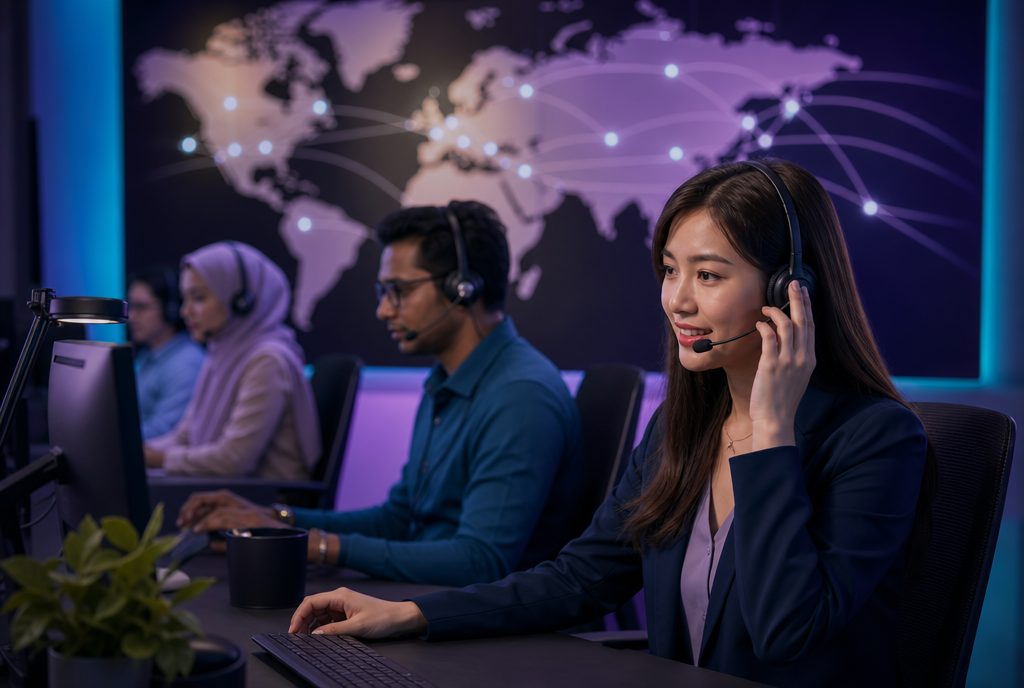
Customer support for logistics and delivery companies works best when it treats the last mile as its own discipline: a high volume of short, anxious contacts about where a parcel is, why it is late, or what happens next, all of which need fast, accurate answers pulled from live tracking data rather than guesswork. Getting this right means pairing trained agents with the courier or warehouse management system in real time, setting clear rules for redelivery and compensation, and treating every complaint as a chance to keep the customer rather than a box to close.
The last mile is where logistics companies win or lose customer trust. A parcel can travel across the country without incident and still leave a bad impression because of a missed delivery window or an unhelpful phone call. Support teams sit at exactly that pressure point, and how they are structured determines whether a delay becomes a minor inconvenience or a lost customer.
Why Is the Last Mile So Hard to Support?
The last mile involves more variables than any other part of the supply chain: traffic, building access, wrong addresses, missed calls, and customers who are not home. Each of these turns into a support contact, and each one needs a different response. A generic script cannot cover "the rider says nobody answered" and "the tracking page still shows out for delivery from yesterday" with the same lines.
Volume Spikes Around Peaks
Delivery volumes spike hard around sales events, festive periods, and month-end promotions. Support volume follows the same curve, usually with a lag of a day or two as delayed parcels generate a wave of "where is my order" contacts. Teams that are sized for average volume get overwhelmed exactly when customers are most anxious.
Information Lives in Multiple Systems
A single order can touch a warehouse management system, a courier's own tracking feed, and the merchant's order platform. Agents who cannot see all three end up telling customers to "wait 24 to 48 hours" by default, which is the answer customers hate most because it signals nobody actually checked.
What Does Good Last-Mile Support Actually Look Like?
Good support in this space is less about friendliness and more about accuracy delivered quickly. Customers contacting about a delivery issue are not looking for empathy first; they want to know what is happening and what happens next. The teams that do this well build a few things into daily operations.
- Live system access, so agents can see the actual tracking status rather than reading the same public page the customer already checked.
- Clear redelivery rules, so agents can commit to a specific window instead of a vague promise that erodes trust further if missed.
- Escalation paths for exceptions, such as damaged goods, wrong items, or repeated failed deliveries, that do not require the customer to repeat the whole story to a second person.
- Proactive notification triggers, so customers hear about a delay before they have to call in and ask.
This is also where good CRM integration pays for itself. When order history, delivery status and previous contacts are visible in one screen, agents stop asking customers to repeat information they have already given, and resolution happens in the first contact rather than after a transfer.
How Should Redelivery and Compensation Be Handled?
Redelivery is the single most common last-mile contact, and it is also the easiest to get badly wrong. Customers do not want an apology loop; they want a firm next attempt and, where the failure was clearly the courier's fault, a fair remedy. Support teams need pre-agreed rules on both, because agents guessing at compensation on the fly leads to inconsistent outcomes that create their own complaints.
Setting Redelivery Windows That Hold
A redelivery commitment is only useful if operations can actually meet it. This means the support team needs a live view of courier capacity, not just a generic "next business day" default. When support and operations are outsourced to the same partner, this coordination is far easier to enforce because both functions report through one operational structure.
Compensation Without Guesswork
Clear tiers, such as what qualifies for a shipping refund versus a partial credit versus a replacement, let agents resolve the contact immediately instead of escalating for approval every time. Escalation should be reserved for genuinely unusual cases, not the routine ones.
How Does Outsourcing Change the Economics?
Logistics and delivery support is naturally spiky: heavy around promotions and festive periods, lighter the rest of the year. Building an in-house team sized for peak volume means paying for idle capacity most of the year, while sizing for average volume means peak periods overwhelm the team and customers feel it immediately. This is one of the clearer cases where the cost comparison between in-house and outsourced support tips toward outsourcing, because a partner can flex headcount around known peaks without the merchant carrying that overhead year-round.
There is also a hidden cost angle worth naming directly. In-house teams often absorb costs that never show up in a simple headcount calculation, from training time lost to turnover, to the technology stack needed to give agents live visibility. A closer look at the hidden costs of running a call centre in-house is worth doing before assuming DIY is cheaper.
What Role Does Multilingual Support Play?
Singapore's delivery customer base spans English, Mandarin, Malay and Tamil speakers, and logistics complaints in particular do not translate well if handled through a single-language script with a translation layer bolted on. A customer describing a specific building access issue or a damaged item wants to be understood precisely, not approximately. Multilingual coverage matters here not as a courtesy but as a resolution-speed issue, because misunderstood details lead to repeat contacts and wrong remedies.
How Should Technology Support the Team?
The right technology stack for logistics support is less about flashy features and more about removing friction between systems. Agents need order status, courier status and customer history on one screen, ideally through an omnichannel setup so a customer who starts on WhatsApp and follows up by phone does not have to restate the issue. Choosing that stack deliberately, rather than accumulating tools reactively, is covered in more depth in a guide to choosing contact centre technology.
None of this requires exotic technology. It requires disciplined integration, clear rules, and agents who are trained specifically on the failure modes of last-mile delivery rather than generic customer service scripts.
How Should Agents Be Trained for Logistics-Specific Contacts?
Generic customer service training does not prepare an agent for the specific pressure of a delivery complaint, where the customer often has a concrete, time-sensitive need, such as a parcel required for an event that day. Training for this environment needs to go beyond scripts and cover the operational realities of the supply chain the agent is supporting.
Understanding the Physical Process
Agents who understand how a parcel actually moves, from warehouse dispatch through to last-mile handoff, are better placed to explain delays credibly and set realistic expectations, rather than repeating a vague status update the customer has already read online. This kind of grounding is part of what separates a genuinely strong agent from one who is simply following a script without understanding the process behind it.
Handling Frustrated Customers Without Escalating the Situation
Delivery complaints often arrive with more emotional charge than a typical enquiry, since a late or missing parcel can disrupt a customer's actual plans. Training needs to cover de-escalation specifically for this context, not as a generic soft-skills module, so agents can acknowledge frustration honestly while still moving the conversation toward a resolution.
What Does a Well-Run Escalation Path Look Like?
Even with strong first-line resolution, some logistics complaints genuinely need escalation, such as a pattern of repeated failures on a specific route or a claim involving significant value. A well-run escalation path routes these quickly to someone with the authority and context to resolve them, rather than bouncing the customer between departments while the same story gets retold each time.
Logistics companies that treat support as a genuine operational function, not an afterthought bolted onto the warehouse, tend to see it reflected in repeat purchase rates and reduced complaint volume over time.
Frequently Asked Questions
What is the most common type of contact in last-mile delivery support?
The most common contact by far is a status enquiry, where a customer wants to know where their parcel is or why a delivery window was missed. Redelivery requests and damaged or missing item reports follow close behind. Because these are high volume and time sensitive, teams that give agents live tracking visibility resolve them far faster than teams working from static order pages.
Should logistics companies outsource customer support or keep it in-house?
It depends on volume patterns and how spiky the business is around peak periods. Outsourcing tends to make more sense when volume swings heavily with promotions or seasons, since a partner can flex capacity without the company carrying idle headcount the rest of the year. Businesses with steady, predictable volume may find in-house viable, though it still requires investment in system integration and training.
How can a delivery company reduce repeat contacts about the same order?
Repeat contacts usually happen when the first response was vague or the customer was not kept informed proactively. Giving agents access to accurate, real-time order and courier data, and sending proactive notifications when a delay is known, both reduce the need for customers to chase updates themselves. First contact resolution should be a tracked metric for this reason.
Does multilingual support actually matter for a Singapore logistics business?
Yes, particularly for complaint-type contacts where precise detail matters, such as describing a building access issue or a damaged item. Singapore's customer base includes English, Mandarin, Malay and Tamil speakers, and handling these languages natively rather than through translation tools reduces misunderstandings and repeat contacts.
What technology is essential for a logistics support team?
At minimum, agents need real-time visibility into order status and courier tracking within a single screen, rather than switching between systems mid-call. An omnichannel setup that keeps context across phone, chat and messaging also matters, since delivery customers frequently switch channels when following up on the same issue.
If you would like an honest, practical view on this for your own business, get in touch via Connect Centre Group's contact page.