
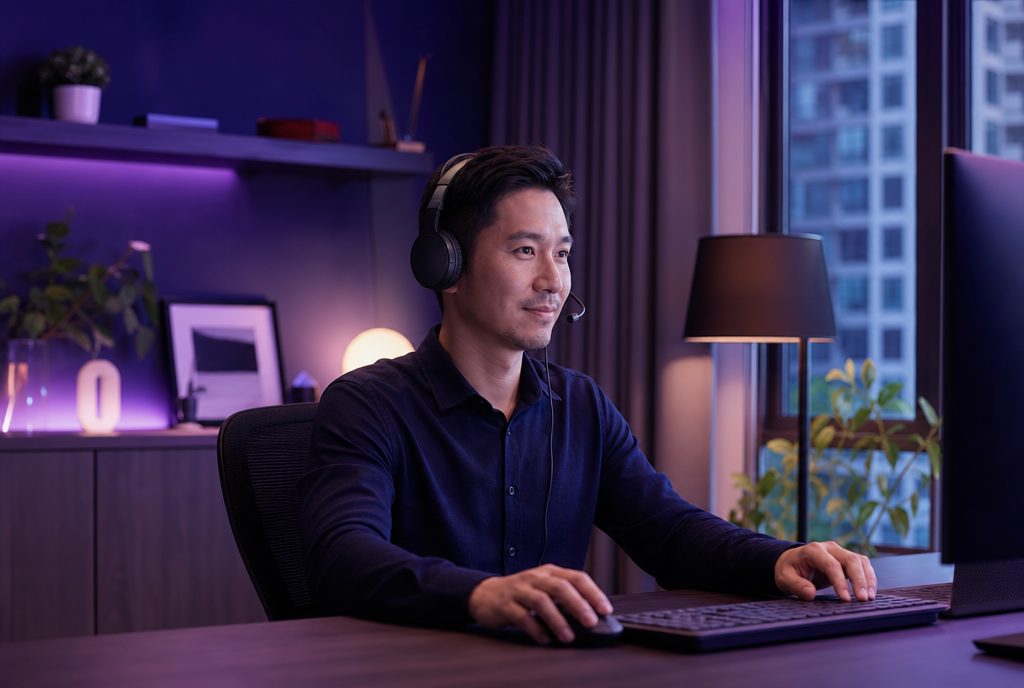
Running a work-from-home contact centre in Singapore well requires the same operational discipline as a physical floor, applied through different tools: secure remote access to systems, reliable monitoring of quality and productivity, and deliberate effort to maintain training and team culture without a shared physical space. It is entirely workable at scale, but it depends on getting the technology, security controls and management practices right from the start rather than treating remote work as a temporary fix.
What began as an emergency measure has become a permanent feature of contact centre operations in Singapore, and for good reason. Remote agents can widen the available talent pool, reduce office overhead, and in many cases perform just as well as an office-based team, provided the operational foundations are solid. The businesses that struggle with work-from-home support are usually the ones that never adapted their processes beyond simply sending agents home with a laptop.
What Makes Remote Contact Centre Work Different From Office-Based Work?
The core job does not change: agents still need to answer contacts accurately and efficiently. What changes is everything around the job, from how supervisors monitor quality, to how new agents are trained, to how a team maintains the kind of informal knowledge-sharing that happens naturally on a physical floor.
Losing the Ambient Support of a Shared Floor
On a physical floor, a new or struggling agent can quietly signal for help, and a supervisor can walk over and listen in without disrupting the call. Remote work removes this ambient layer of support entirely, so it has to be deliberately rebuilt through structured check-ins, live call monitoring tools, and clear escalation channels that do not rely on physical proximity.
Security Becomes a Distributed Problem
A physical contact centre floor has natural security controls built in: locked devices, no personal phones near workstations, supervised network access. Remote work spreads these same requirements across dozens or hundreds of individual home setups, which is a materially harder problem to solve consistently.
What Security Controls Actually Matter for Remote Agents?
Given that contact centre agents routinely handle sensitive personal and financial data, security cannot be an afterthought in a remote setup. This is particularly relevant in Singapore given PDPA obligations around how personal data is collected, stored and protected.
- Secure, monitored remote access, using a virtual desktop or equivalent controlled environment rather than allowing customer data to sit on a personal device's local storage.
- Restricted data movement, disabling the ability to download, screenshot, or copy customer information outside approved systems.
- Verified home work environments, confirming agents have a private space and secured network before they handle live customer contacts.
- Device and network standards, including company-managed devices or strict minimum requirements for any personal devices used, plus mandatory VPN or equivalent secured connections.
These controls matter even more for sectors with heightened compliance expectations, such as financial services, where a closer look at data security standards for a financial call centre partner shows how much scrutiny remote setups can face from client audits and regulators alike.
How Do You Maintain Quality and Productivity Remotely?
Quality monitoring does not have to suffer in a remote setup, but it requires intentional systems rather than passive supervision. Call recording and review, real-time dashboards, and structured coaching sessions all need to be built into the operating rhythm rather than assumed to happen naturally.
Making Call Recording Work for You
Recorded calls become even more valuable in a remote environment because they are often the primary evidence a supervisor has of how an interaction actually went. Getting the consent and retention side of this right matters too, and getting notice, consent and retention right for those recordings is worth treating as a deliberate policy rather than an afterthought before scaling a remote recording programme.
Keeping Productivity Visible Without Micromanaging
Productivity tracking for remote agents needs to focus on outcomes, such as resolution quality and adherence to schedule, rather than intrusive monitoring that damages trust. Overly aggressive activity tracking tends to create resentment without actually improving performance, while clear, outcome-based expectations combined with regular coaching tend to work better.
How Should Training Work for a Distributed Team?
New agent training is the hardest part of remote operations to get right, because so much of traditional training relies on shadowing and in-person feedback. A serious training programme adapted for remote delivery needs structured virtual shadowing, recorded call reviews, and frequent short feedback sessions rather than one long onboarding block followed by minimal follow-up. Continuous training also matters more in remote settings, since it is one of the few structured touchpoints that keeps a distributed team connected to the organisation and to each other.
Does Remote Work Affect Business Continuity Planning?
In one sense, a distributed remote workforce is a genuine business continuity advantage, since it is not vulnerable to a single physical location becoming inaccessible. But it introduces its own continuity risks, such as widespread internet or power disruption affecting many agents simultaneously, or a security incident affecting home network setups. These scenarios deserve explicit coverage in a proper business continuity plan, and businesses that have gone through ISO 22301 certification will recognise that remote work needs its own risk assessment, not just an assumption that distributed equals resilient by default.
Is Work-From-Home Right for Every Contact Centre Function?
Not necessarily. Some functions, particularly those handling the most sensitive data or requiring the tightest real-time supervision, may still be better suited to a controlled office environment or a hybrid model. The right answer depends on the sensitivity of the work, the maturity of the security controls available, and how well the organisation can maintain training and culture at a distance.
A well-run work-from-home contact centre in Singapore is not a compromise on quality when the fundamentals are in place.
How Does Remote Work Affect Team Culture?
Culture is harder to build deliberately when a team never shares a physical space, but it is far from impossible. Businesses that succeed at this tend to invest in regular video check-ins, structured team moments beyond pure work discussion, and recognition practices that work as well over a screen as they would in person.
Making Recognition Visible Remotely
On a physical floor, a supervisor's quiet nod or a team's shared reaction to a great save is visible to everyone nearby. Remote teams need to recreate this deliberately, whether through a shared channel that highlights strong performance or regular team calls that make space for it, rather than assuming recognition will happen organically the way it might in person.
Preventing Isolation
Remote agents are more vulnerable to feeling isolated, particularly newer hires who have not yet built relationships with colleagues. Pairing new agents with a buddy for regular informal check-ins, separate from formal training, helps address this directly rather than leaving it to chance.
How Should Hybrid Models Be Considered?
Some businesses find a hybrid approach works better than a fully remote model, with agents coming into a shared space periodically for training, coaching or team events while working remotely most of the time. This can capture some of the culture-building benefits of a physical floor without giving up the flexibility and cost advantages of remote work, and it is worth evaluating honestly against a fully remote model rather than assuming one approach is automatically superior.
Running a work-from-home model requires more deliberate investment in security, monitoring and training than a physical floor did by default, but the businesses that make that investment properly tend to find remote work is a genuine long-term operating model, not just a temporary accommodation.
Frequently Asked Questions
Is work-from-home contact centre support secure enough for handling sensitive customer data?
It can be, provided the right controls are in place, including secure and monitored remote access, restrictions on data downloads or screenshots, and verified private work environments for agents. Security in a remote setup is genuinely harder to standardise across many individual home setups than in a single controlled office, so it needs deliberate investment rather than being assumed by default.
How does call recording work for remote agents in Singapore?
Call recording works largely the same way technically for remote agents as for office-based ones, since recordings typically happen through the phone system rather than the agent's physical location. The important consideration is ensuring proper consent and PDPA-compliant handling of those recordings, which applies regardless of where the agent is physically located.
What is the hardest part of training new agents remotely?
The hardest part is replicating the informal support and hands-on feedback that happens naturally when a new agent sits near an experienced one on a physical floor. This needs to be deliberately rebuilt through structured virtual shadowing, frequent recorded call reviews, and regular short coaching check-ins rather than a single onboarding session.
Does a work-from-home model help or hurt business continuity planning?
It can genuinely help, since a distributed workforce is not dependent on a single physical location remaining accessible during a disruption. However it introduces its own risks, such as widespread internet outages affecting many agents at once, which need to be explicitly assessed rather than assumed away.
Can every contact centre function be run remotely?
Most functions can, but some of the most sensitive or tightly supervised work may still be better suited to an office or hybrid setup depending on the security controls a business can realistically maintain. The right model depends on the sensitivity of the data involved and how mature the organisation's remote monitoring and security practices are.
If you would like an honest, practical view on this for your own business, get in touch via Connect Centre Group's contact page.