
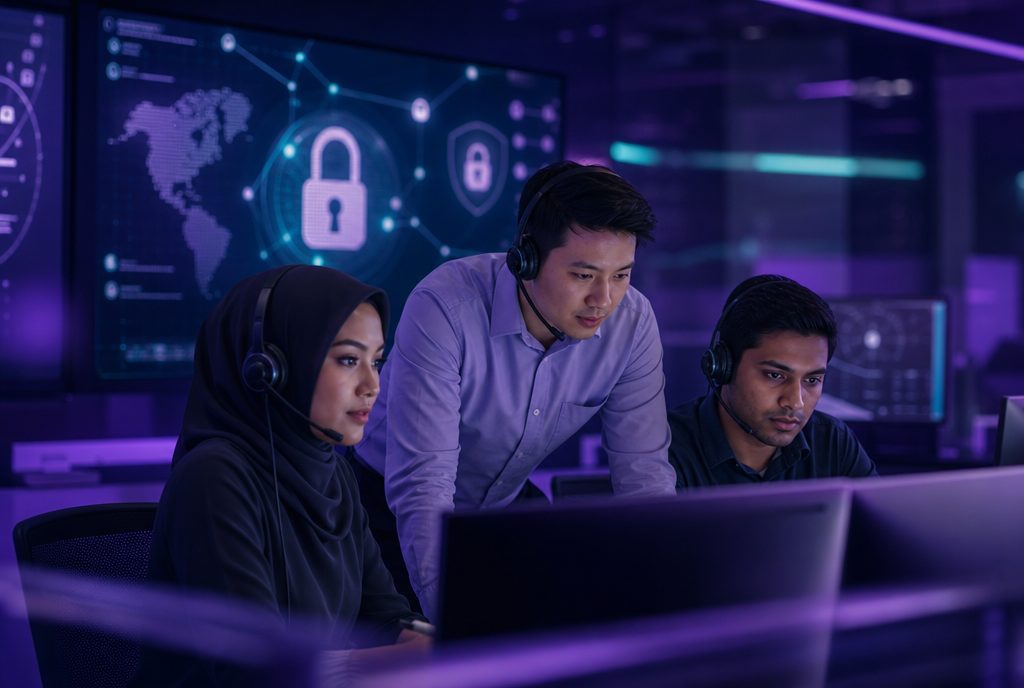
ISO 27001 matters when choosing a BPO partner because it verifies the partner has a formally audited information security management system covering how it identifies risks, controls access to data, and continually reviews its own security practices, rather than simply claiming to take security seriously. For any business handing over customer data to an outsourced partner, this certification is one of the few independently verified signals available before a relationship even begins.
What Does ISO 27001 Actually Certify?
ISO 27001 is an international standard for information security management systems. Certification means an accredited external auditor has reviewed the organisation's policies, processes and controls against the standard's requirements and confirmed they are genuinely in place and operating, not just documented on paper. It covers areas like access control, risk assessment, incident response, physical security and ongoing internal audits.
Crucially, it is not a one-time check. Certified organisations undergo periodic surveillance audits to maintain the certification, which means the standard requires continued discipline rather than a single point-in-time review that could be stale by the time a client sees it.
What It Is Not
ISO 27001 does not guarantee a partner will never suffer a security incident. No certification can promise that. What it does provide is confidence that the partner has a structured, audited approach to managing security risk, which meaningfully reduces the likelihood and severity of incidents compared to an organisation with no formal system at all.
Why Does This Matter More for a BPO Partner Specifically?
A BPO or contact centre partner typically has direct access to a client's customer data, names, contact details, transaction history, sometimes payment information or other sensitive records, often across a large volume of interactions every day. This is a meaningfully different risk profile from a typical software vendor, since the partner's staff are actively handling this data as part of daily operations, not just storing it in a system.
This is why data security credentials matter so much when evaluating a contact centre partner for regulated industries like banking and fintech, where the consequences of a data mishandling incident extend well beyond reputational damage into genuine regulatory exposure.
How Should a Business Actually Verify the Certification?
A logo on a proposal document is not verification. Certification bodies maintain public registers, and a genuine ISO 27001 certificate will state the certifying body, the scope of certification, and the certificate's validity period. Businesses evaluating a partner should ask to see the actual certificate and confirm it directly with the issuing body if there is any doubt.
- Check the scope, certification can be scoped narrowly to a specific site or business unit, so confirm it actually covers the team and location that will handle your data.
- Check the validity dates, certificates expire and require renewal through surveillance audits, an expired certificate is not a current one.
- Check the certifying body, accredited certification bodies are themselves subject to oversight, which matters for the credibility of the certificate.
- Ask what the last audit found, a mature partner should be comfortable discussing findings from recent audits and how they were addressed.
What Should Sit Alongside ISO 27001 in an Evaluation?
Certification is a strong signal but not the only one worth checking. A thorough evaluation also looks at how the partner actually implements security day to day, agent screening and background checks, physical access controls at the site, how data is segregated between different clients, and how quickly the partner responds when something does go wrong.
Physical and Operational Controls
For contact centre work specifically, physical controls matter as much as digital ones. Clean desk policies, restrictions on personal devices in operational areas, and controlled access to areas where sensitive client data is visible on screen all reduce the practical risk of data leaking, regardless of how strong the digital controls are.
How Does This Connect to Broader Compliance Requirements?
ISO 27001 is one piece of a wider compliance picture, particularly for businesses operating under Singapore's Personal Data Protection Act or working with government agencies, which often have their own specific requirements beyond general certification. Our guide to data security compliance in government outsourcing goes into this in more detail for businesses with heightened compliance obligations.
Business continuity planning is a related, often overlooked area worth checking alongside security certification. A partner with strong data security but no genuine plan for handling a disruption, a system outage, a site issue, a regional event, still leaves a business exposed. Our explanation of ISO 22301 business continuity certification is a useful companion piece for evaluating this side of a partner's resilience.
What Questions Should a Business Ask During Vendor Evaluation?
- Can you provide the current ISO 27001 certificate and confirm its scope? This should be a straightforward request that any genuinely certified partner can fulfil quickly.
- How is client data segregated from other clients' data? Particularly relevant for a partner serving multiple businesses from shared infrastructure.
- What is the incident response process, and what is the notification timeline? A business needs to know how quickly it would be told if something went wrong.
- How are agents trained and screened before handling sensitive data? Security policy on paper means little without disciplined day-to-day practice behind it.
ISO 27001 is a genuinely useful filter when comparing BPO partners, but it works best as a starting point for a deeper conversation about how security is actually practised, not as the final word on its own. A partner that treats the certification as evidence of ongoing discipline, rather than a badge to display and forget, is usually the safer long-term choice.
How Does This Play Out for Government and Public Sector Work?
Businesses supporting government agencies or public sector contracts often face security expectations that go beyond what a typical commercial client would require, driven by the particularly sensitive nature of citizen data and the heightened public scrutiny that follows any mishandling. ISO 27001 tends to be treated as a baseline expectation in this space rather than a differentiator, with additional government-specific requirements layered on top.
A BPO partner that already works with government agencies has usually built its processes around this heightened bar as standard practice, rather than needing to bolt on extra controls for a single contract. This experience is worth asking about directly during evaluation, since a partner unfamiliar with public sector expectations may genuinely meet ISO 27001 while still lacking the specific practices a government contract would require. Our guide to how government agencies choose contact centre partners goes into this selection process in more depth.
The Weight of Public Trust
Beyond the formal compliance requirements, there is a genuine reputational dimension to government-adjacent work that commercial contracts do not always carry in the same way. A data incident involving a government service tends to draw far more public and media attention than an equivalent incident at a private company, which is part of why the bar for security discipline in this space is set as high as it is.
What Does the Certification Process Actually Involve for a BPO?
Achieving ISO 27001 certification is a genuinely demanding process, not a quick paperwork exercise. It typically involves building a complete information security management system from the ground up, documenting policies, implementing controls, training staff, and then undergoing a formal external audit before certification is even granted. This is followed by ongoing surveillance audits to maintain it.
Understanding this effort helps explain why the certification carries real weight as a signal. A partner that has been through this process, and continues to maintain it year after year through surveillance audits, has demonstrated a sustained organisational commitment to security discipline that is genuinely harder to fake than a one-off security policy document.
Frequently Asked Questions
Does ISO 27001 certification mean a BPO partner will never have a data breach?
No certification can guarantee this. What ISO 27001 verifies is that the organisation has a formally audited information security management system in place, which significantly reduces risk but does not eliminate it entirely. It should be treated as strong evidence of disciplined practice, not an absolute guarantee.
How can I verify a partner's ISO 27001 certificate is genuine and current?
Ask to see the actual certificate, which should list the certifying body, the certification scope, and its validity dates. If there is any doubt, you can confirm directly with the issuing certification body rather than relying on a claim in a proposal document.
Is ISO 27001 required for handling financial or healthcare data in Singapore?
It is not always a strict legal requirement, but many businesses in regulated sectors treat it as a practical baseline expectation for any outsourced partner handling sensitive data. Specific regulatory requirements can go beyond general certification, so it is worth checking what applies to your particular industry.
What is the difference between ISO 27001 and ISO 22301?
ISO 27001 covers information security management, protecting data from unauthorised access or loss. ISO 22301 covers business continuity management, ensuring an organisation can keep operating or recover quickly after a disruption. Both are relevant when evaluating a BPO partner, but they address different risks.
Should ISO 27001 certification be the only factor in choosing a BPO partner?
No, it should be one factor among several. It is worth pairing certification with direct questions about data segregation, incident response processes, agent screening practices and business continuity planning to get a fuller picture of how security is actually practised day to day.
If you would like an honest, practical view on this for your own business, get in touch via Connect Centre Group's contact page.